
Equine Odontoclastic Tooth Resorption and Hypecementosis (EOTRH)
Understanding a Painful but Often Hidden Disease
If your horse is getting older and has started dropping feed, resisting the bit, or simply seems "not quite right," there could be more going on than just old age. One condition that has become increasingly recognised in senior horses is Equine Odontoclastic Tooth Resorption and Hypercementosis (EOTRH).
Although the name sounds intimidating, understanding this disease can help horse owners recognise the signs early and ensure their horse remains comfortable for years to come.
What is EOTRH?
EOTRH is a painful, progressive disease that affects the incisor and canine teeth of horses. It is most commonly diagnosed in horses over 15 years of age, although younger horses can occasionally be affected.
The disease involves two processes occurring at the same time:
Tooth resorption – specialised cells begin to break down the hard tissues of the tooth, gradually destroying it from within.
Hypercementosis – in response to this damage, the body attempts to repair the tooth by producing excessive amounts of cementum, the normal outer covering of the tooth root. Unfortunately, this repair process is abnormal and ineffective.
The result is teeth that become structurally unsound, inflamed, infected and, most importantly, painful.
Why does it happen?
Despite ongoing research, we still don't know exactly what causes EOTRH.
Several factors are thought to contribute, including:
Age-related changes
Chronic inflammation around the teeth
Excessive mechanical stress on the incisors
Altered blood supply
Genetic susceptibility
Changes within the periodontal ligament
It is important to know that EOTRH is not caused by poor dental care. Even horses that receive regular professional dental examinations can develop the disease.
Which horses are affected?
EOTRH is most commonly seen in:
Horses over 15 years of age
Geldings slightly more commonly than mares
All breeds, although some studies suggest Warmbloods and Thoroughbreds may be overrepresented
Many affected horses continue eating normally until the disease is quite advanced, making routine examinations especially important.
What signs should owners look for?
One of the challenges of EOTRH is that horses are incredibly good at hiding oral pain.
Early signs may be subtle:
Difficulty biting off carrots or apples
Pulling hay rather than neatly biting it
Dropping feed while eating
Taking longer to eat
Reluctance to graze very short pasture
Weight loss despite a normal appetite
Bad breath
Excessive salivation
Blood on feed or water buckets
Head shyness
Resistance to having the mouth handled
Changes in behaviour when bridled or bitted
Reduced willingness to work
As the disease progresses, owners may notice enlarged or misshapen incisors, receding gums, loose teeth or draining tracts above the affected teeth.
Some horses show remarkably few outward signs despite having severe disease.
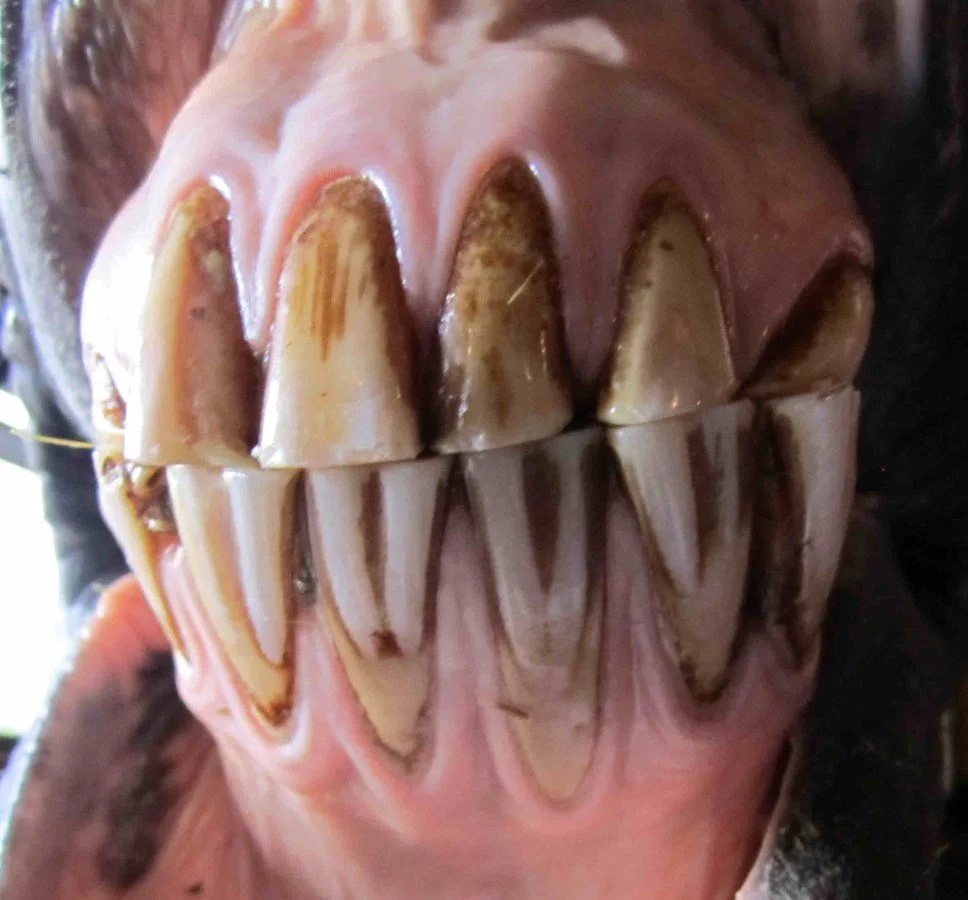
What does EOTRH look like?
From the outside, affected incisors may appear:
Longer than normal
Bulbous or swollen near the gumline
Covered with irregular bony-looking enlargements
Loose
Fractured
Discoloured
However, appearances can be misleading.
Some horses with severe pain have only minor visible changes, while others with dramatic-looking teeth remain relatively comfortable.
This is why radiographs are essential.
Whatever it is, the way you tell your story online can make all the difference.
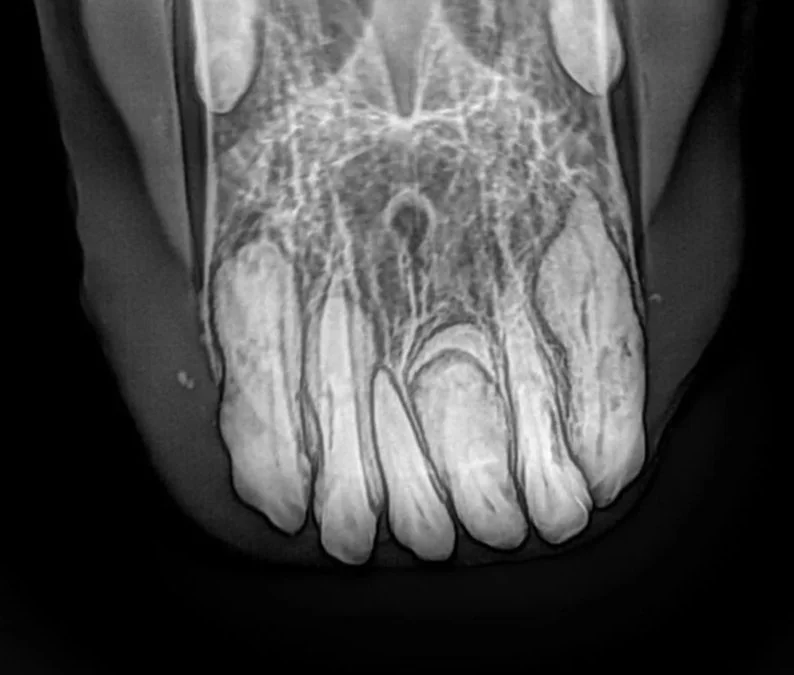
Why are dental radiographs so important?
A thorough oral examination tells us only part of the story.
Much of EOTRH occurs below the gumline, where it cannot be seen.
Dental radiographs allow us to assess:
Root destruction
Areas of tooth resorption
Hypercementosis
Infection
Ankylosis (fusion of the tooth to surrounding bone)
Bone loss around the teeth
In many horses, radiographs reveal disease that is far more advanced than expected from the clinical examination alone.
They are essential for making an accurate diagnosis and planning appropriate treatment and can be performed without needing to travel to a hospital.
Is EOTRH painful?
Yes.
Although horses often hide pain exceptionally well, EOTRH is considered a significant source of chronic oral pain.
Imagine having multiple infected, loose teeth while continuing to eat every day. Horses are remarkably stoic, but that doesn't mean they are comfortable.
Many owners are surprised by the dramatic improvement in their horse's attitude after treatment.
Common comments include:
"He acts years younger."
"I wish I'd done it sooner."
"She's happier than she's been in years."
These improvements remind us just how effectively horses compensate for chronic pain.
Can EOTRH be cured?
Unfortunately, no.
EOTRH is a progressive disease.
Once it begins, it cannot currently be stopped or reversed.
Treatment depends on the severity of disease.
Mild disease
For horses with minimal radiographic change and little evidence of discomfort, monitoring may be appropriate.
Regular examinations and repeat radiographs allow progression to be assessed over time.
Pain relief or management of secondary periodontal disease may occasionally be recommended.
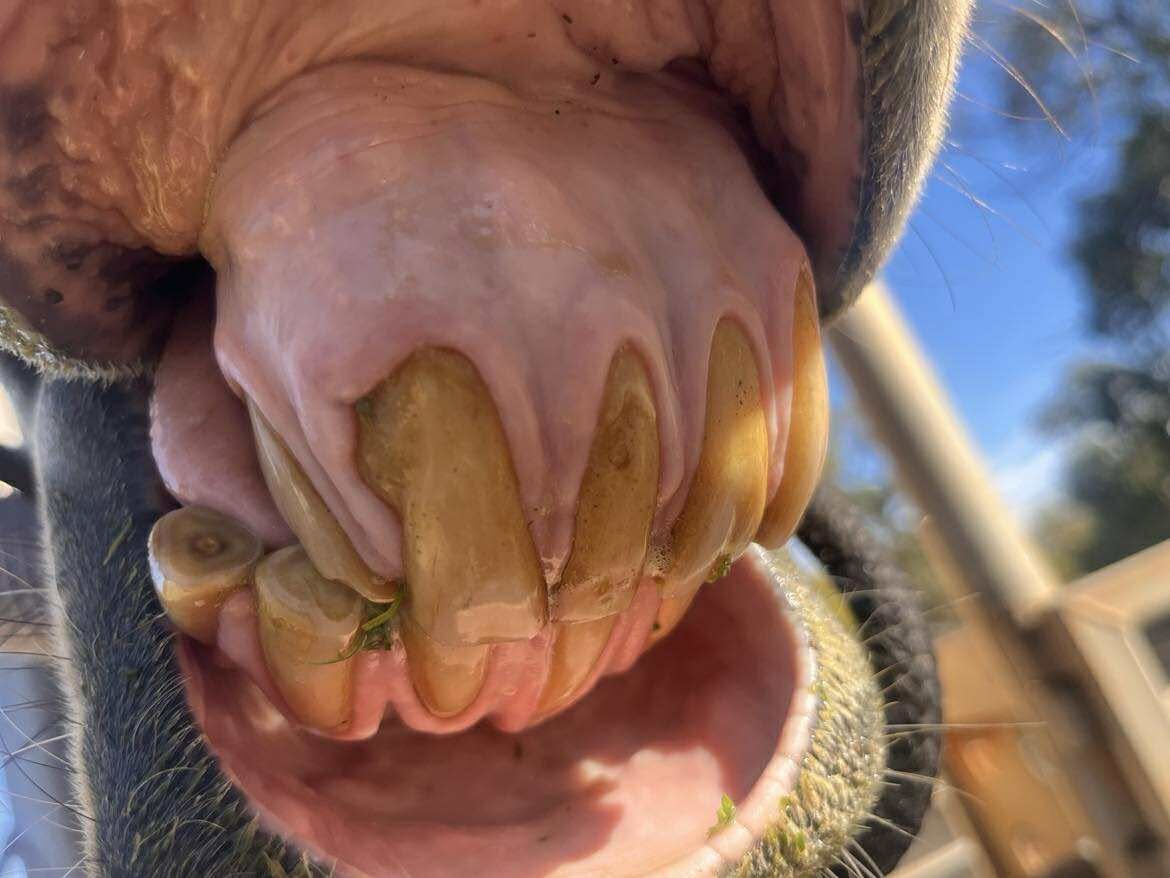
Advanced disease
Once teeth become painful, infected, loose or significantly affected on radiographs, extraction is the treatment of choice.
While the idea of removing multiple incisors can sound alarming, horses generally cope extraordinarily well.
Can horses eat without their incisors?
Absolutely.
This is one of the most common concerns owners have.
Incisors are primarily used for grasping and cutting forage.
The cheek teeth—the large grinding teeth at the back of the mouth—do almost all of the chewing.
Most horses quickly learn to:
Graze pasture
Eat hay
Consume hard feed
Maintain body weight
Some horses benefit from slightly longer pasture or hay presented in a way that's easier to grasp during the initial recovery period, but the vast majority return to normal eating habits.
What happens after extraction?
Modern extraction techniques, combined with appropriate pain relief and sedation, make recovery much smoother than many owners expect.
Following surgery:
Pain is usually dramatically reduced.
Horses often begin eating soft feeds within hours.
Healing progresses over several weeks.
Most return to normal paddock life rapidly.
Owners frequently report significant improvements in appetite, behaviour and overall quality of life.
Would you like more first hand feedback from owners? There’s a facebook group called ‘Equine Odontoclastic Tooth Resorption and Hypercementosis (EOTRH) support’ where owners share experiences.
Can EOTRH be prevented?
Unfortunately, there is currently no proven way to prevent EOTRH.
However, early diagnosis allows treatment before horses endure prolonged pain.
Regular dental examinations become increasingly important as horses age, particularly after 15 years of age.
If your veterinarian notices any abnormalities affecting the incisors or canines, dental radiographs may be recommended even if your horse appears comfortable.
The Take-Home Message
EOTRH is one of the most common painful dental diseases affecting older horses, yet many owners have never heard of it.
Because horses naturally mask chronic pain, the disease often goes unnoticed until it is advanced. Routine dental examinations and dental radiographs are the best way to identify affected teeth early.
Although there is currently no cure, appropriate treatment—particularly extraction of severely affected teeth—can dramatically improve a horse's comfort, behaviour and quality of life.
If your older horse is showing subtle changes in eating, behaviour or performance, or if you're simply unsure whether their incisors are healthy, ask your veterinarian to examine the front teeth carefully. A few dental radiographs today may reveal a problem that can be treated before your horse spends months or years coping with unnecessary pain.
Your horse may not be able to tell you their mouth hurts—but with regular dental care, we can help ensure they never have to.